The short answer
Key takeaways
- Most current GMT-Master II models use Rolex calibre 3285, with an independently adjustable local-hour hand and an approximate 70-hour power reserve.
- Choose the bezel and metal first. An Oyster or Jubilee bracelet changes the character of the watch, but condition and originality usually matter more than the bracelet debate.
- Compare the exact watch in front of you: case geometry, bracelet condition, bezel insert, set contents and seller evidence can separate two examples of the same reference.
Modern GMT-Master II quick-reference table
The nicknames are collector shorthand, not official Rolex model names. They are useful when browsing, but the reference number is the reliable identifier. Bracelet suffixes and catalogue configurations can vary, so check the full reference and the actual watch rather than relying on a listing headline.
| Collector name | Typical modern reference | Bezel and metal | Character |
|---|---|---|---|
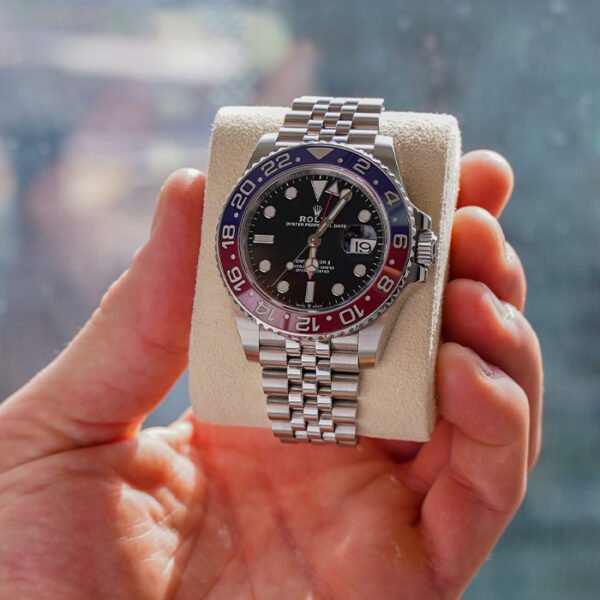
| Pepsi | 126710BLRO | Red/blue, Oystersteel | Historic, colourful, immediately recognisable |
| Batman / Batgirl | 126710BLNR | Blue/black, Oystersteel | Versatile and comparatively restrained |
| Bruce Wayne | 126710GRNR | Grey/black, Oystersteel | Quietest steel option |
| Sprite | 126720VTNR | Green/black, Oystersteel | Left-sided crown and date; deliberately unusual |
| Root Beer | 126711CHNR / 126715CHNR | Brown/black, Rolesor or Everose gold | Warmer, richer and more formal |
How the modern GMT-Master II works
A GMT-Master II can show local time plus a second time zone using the 24-hour hand and rotating bezel. The local-hour hand moves independently in one-hour jumps, which makes changing time zones straightforward without stopping the movement. The date follows the local-hour hand in either direction.
Across much of the current family, the core proposition is similar: a 40 mm Oyster case, 100 metres of stated water resistance, a bidirectional ceramic 24-hour bezel and calibre 3285 with an approximate 70-hour power reserve. Those shared specifications are why a spreadsheet rarely settles the decision. Colour, metal, bracelet and the condition of the particular example dominate the experience.
Pepsi: the historic red-and-blue choice
The red-and-blue bezel is the strongest visual link to the original pilot's watch. On the modern 126710BLRO, the colour is expressive without changing the familiar steel case. It is the obvious option for someone who wants the story of the GMT to remain visible from across a room.
The trade-off is precisely that visibility. It coordinates less quietly than blue/black or grey/black, and slight colour differences can look more pronounced in photographs than in person. View the insert in daylight as well as indoor light. The right question is not which batch of ceramic is “best”; it is whether you like the colour of the watch you are buying.
Batman and Batgirl: blue and black
“Batman” commonly refers to the blue-and-black GMT on an Oyster bracelet, while “Batgirl” is used for the same colour combination on Jubilee. The names oversimplify the reference history, but they capture the main wearing difference. Oyster makes the watch look more tool-like; Jubilee adds texture and sits more fluidly around many wrists.
Blue and black is arguably the easiest colourful GMT to wear daily. Half of the bezel reads almost neutral, while the blue section catches enough light to distinguish it from a black-bezel sports watch. If this is to be a one-watch collection, it is often the first comparison we suggest.
Bruce Wayne: grey and black
The grey-and-black GRNR bezel is the discreet modern choice. In soft light the insert can look nearly monochrome; stronger light reveals the split. Steel versions offer the visual calm of a black sports watch while retaining the two-tone GMT language.
It rewards an in-person viewing because photography can exaggerate or suppress the grey. Buyers choosing between GRNR and BLNR should compare them on the wrist rather than making a decision from highly edited product images.
Sprite: green, black and left-sided
The 126720VTNR moves the crown and date aperture to the left side of the case and uses a green-and-black bezel. It is more than a new colour: the reversed layout changes the visual balance of one of Rolex's most familiar designs.
Some left-handed wearers appreciate the crown position when wearing the watch on the right wrist, but handedness is not a rule. Many owners wear it conventionally on the left. What matters is whether the asymmetry feels intentional and comfortable to you. Our dedicated Rolex Sprite guide goes deeper into the layout and buying checks.
Root Beer: Everose warmth
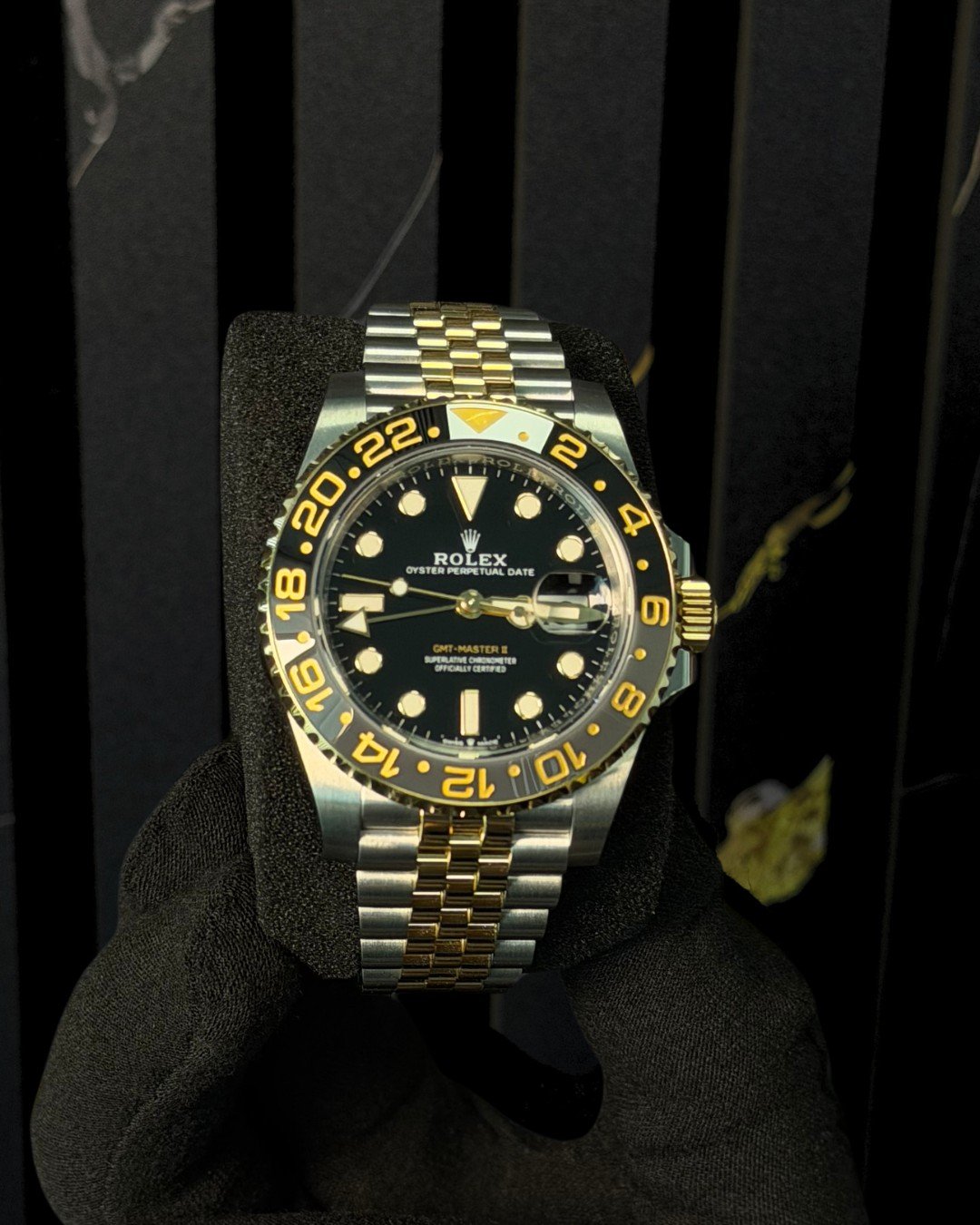
The modern brown-and-black “Root Beer” is offered in Everose Rolesor and full Everose gold configurations. The two-tone 126711CHNR keeps the weight and warmth of gold in check; the 126715CHNR makes the precious-metal character the point.
Condition deserves particular attention. Polished centre links show hairlines readily, and the crisp relationship between brushed and polished surfaces matters. A carefully worn gold watch can be very appealing; an aggressively refinished case is not made better by the material alone.
Oyster or Jubilee?
There is no universally superior bracelet. Jubilee distributes weight across more, smaller links and brings a dressier texture. Oyster has broader surfaces, a simpler visual line and a more overt sports-watch feel. Both can pick up desk marks in their polished areas.
Prioritise the condition of the bracelet actually supplied: clasp edges, excess play, damaged screws, heavy refinishing and whether all expected links are present. Do not pay for a preferred bracelet while overlooking a tired watch attached to it.
What to check before buying a pre-owned GMT-Master II
- Reference and serial evidence: check that the reference, card and invoice describe the same model. Serial numbers should be handled privately, not published in full.
- Case geometry: inspect lug shape, crown guards and the distinction between brushed and polished surfaces. Refinishing is not automatically a problem, but it should be proportionate and disclosed.
- Ceramic insert: use raking light to look for chips at the outer edge, impact marks and damage around the pip or numerals.
- Bracelet and clasp: check operation, link count, screws and excessive play. Confirm any additional links promised are supplied.
- Functions: test the independently adjustable hour hand, date change, bezel clicks, crown winding and time-setting.
- Seller evidence: expect a clear invoice, business identity, terms, return or viewing arrangements and a traceable payment route.
Use our broader pre-owned Rolex buying checklist for ownership, payment and dealer checks that apply beyond the GMT family.
How to choose the right GMT-Master II
Start with the decision that cannot be changed cheaply: steel, two-tone or full gold; conventional or left-sided case; bright or quiet bezel. Then decide which bracelet suits the way you dress and the weight you prefer. Finally, compare examples on condition, set and price.
If two watches are close, buy the one you would choose without knowing which has the louder nickname. A GMT-Master II should serve as a travel watch and daily object first. Rarity, online attention and short-term resale values can change; your reaction to the watch on the wrist is the durable part.
Questions from buyers
Frequently asked questions
What is the difference between a Rolex Batman and Batgirl?
Both names usually describe a blue-and-black GMT-Master II. “Batman” is commonly used for an Oyster-bracelet configuration and “Batgirl” for Jubilee. Always verify the full reference, year and bracelet supplied because nickname usage is not official or perfectly consistent.
Which modern Rolex GMT-Master II is best for daily wear?
That depends on taste and wrist. Blue/black and grey/black are the most visually restrained steel choices; Oyster feels sportier and Jubilee more fluid and dressy. Condition, fit and the exact example matter more than a universal ranking.
Can a GMT-Master II show three time zones?
It can display local time and a second zone directly. A third zone can be read by rotating the 24-hour bezel relative to the GMT hand, provided you account for the offset.
Is a Rolex GMT-Master II a good investment?
It should be bought primarily as a watch. Secondary-market prices can rise or fall and vary by reference, condition, set and timing. Past premiums are not a guarantee of future value.
Source notes
Technical specifications and brand policies were checked against the following primary sources. Market observations are TWD Watches editorial commentary, not financial advice.